Why is my countertop staining, cracking, or separating?
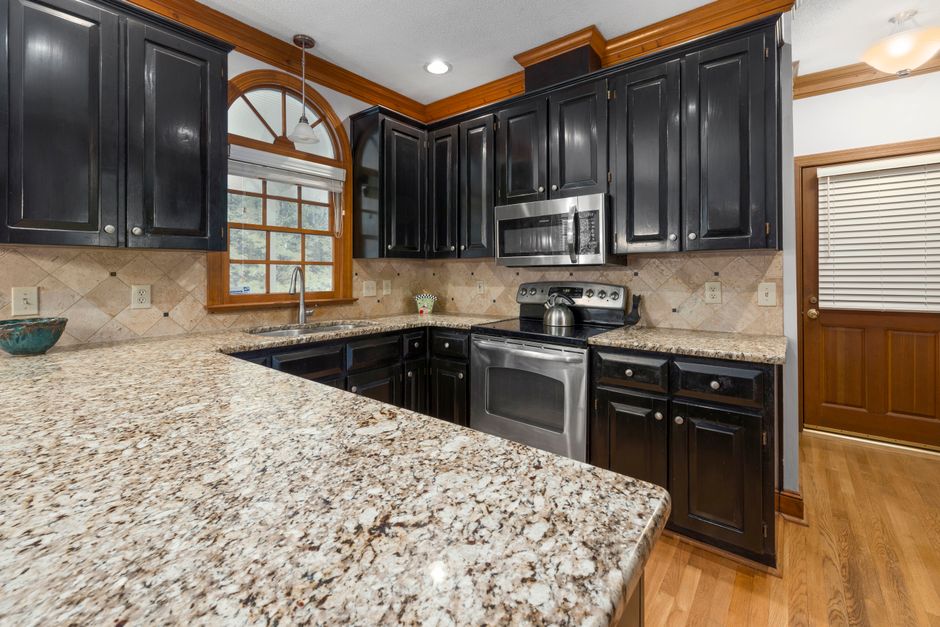
The countertop carries load and sheds water, and nearly every mark on it comes from one of those two jobs going wrong. Diagnosis in Omaha, NE starts with sorting the mark into etch, stain, mineral residue or crack, and the notes kept at countertops omaha alone in the kitchen follow that same order. Older houses in Douglas County add movement to the list, because framing that has settled for decades does not hold a rigid slab level.
Etch or stain
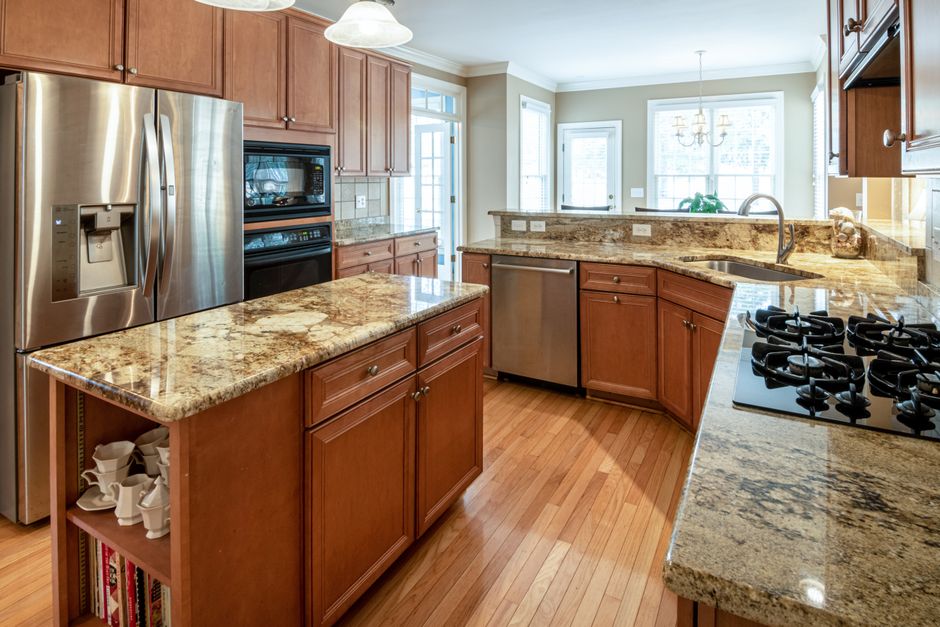
Etching is surface damage from a chemical reaction, while a stain is a substance absorbed into the material. On marble, an etch shows as a dull mark, usually where lemon juice or vinegar sat. Scrubbing does nothing because nothing is sitting on top. The fix is often refinishing rather than stain removal, and the dull patch tends to stand out most on a polished face.
Dark spots in porous stone
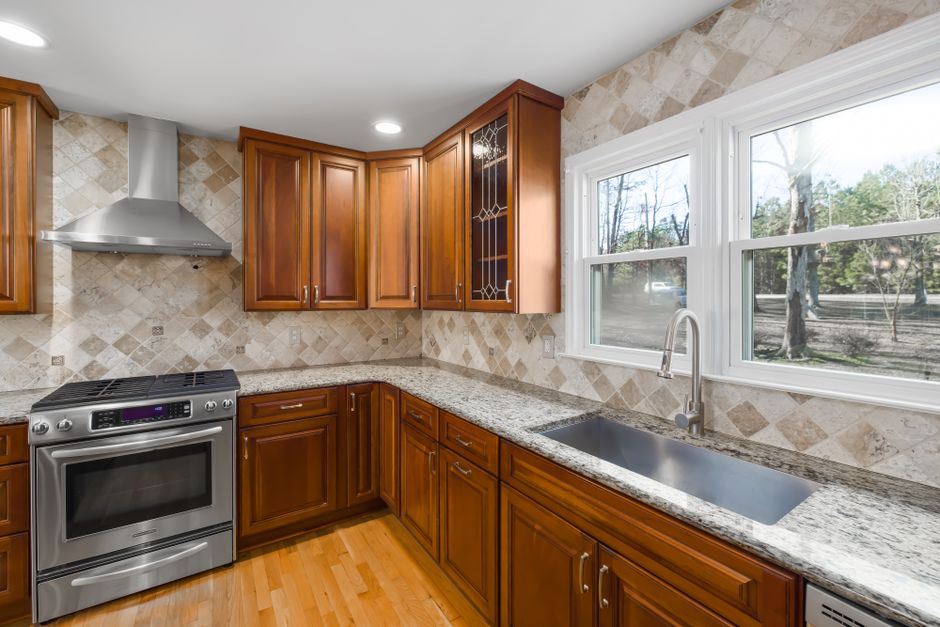
A dark spot in porous stone may be absorbed oil or water. Water marks can lighten as the stone dries, so give it a day before treating anything. Oil can sometimes be drawn out with a poultice suited to the stone, but that is not a promise that every stain comes out fully. Granite and marble both take this kind of mark when the sealer has worn thin.
White buildup at the faucet
White or chalky buildup near a faucet is often mineral residue from hard water rather than a defect in the countertop. It sits on the surface and gathers where drips dry at the base of the fixture. Wiping that spot dry after use slows it down. A crust that returns in the same ring points to a dripping fixture, not a bad slab.
Where cracks start
Cracks often start at weak points such as sink cutouts, inside corners and narrow strips of stone. A thin front strip beside a cooktop cutout carries very little material. A crack does not by itself mean the whole top must be replaced. A hairline at a cutout is worth measuring and watching for movement before anyone talks about a new quartz or granite top.
Movement in older homes
Unsupported overhangs, uneven cabinets and settling place stress on a rigid countertop. Old Market buildings with brick walls out of plumb are a common case. A long run that rides on two high cabinet corners will flex under load at the weakest point, usually the seam or the sink cutout. Careful templating records those gaps before the slab is cut, and shims or a leveled base keep the weight spread. Laminate over a substrate and butcher block tolerate some flex, while quartzite and marble do not.
Heat belongs in the same list. Rapid localized heating can crack stone or damage quartz resin, so a trivet under hot cookware is the safer habit on every surface.