Which countertop material handles hard water best?
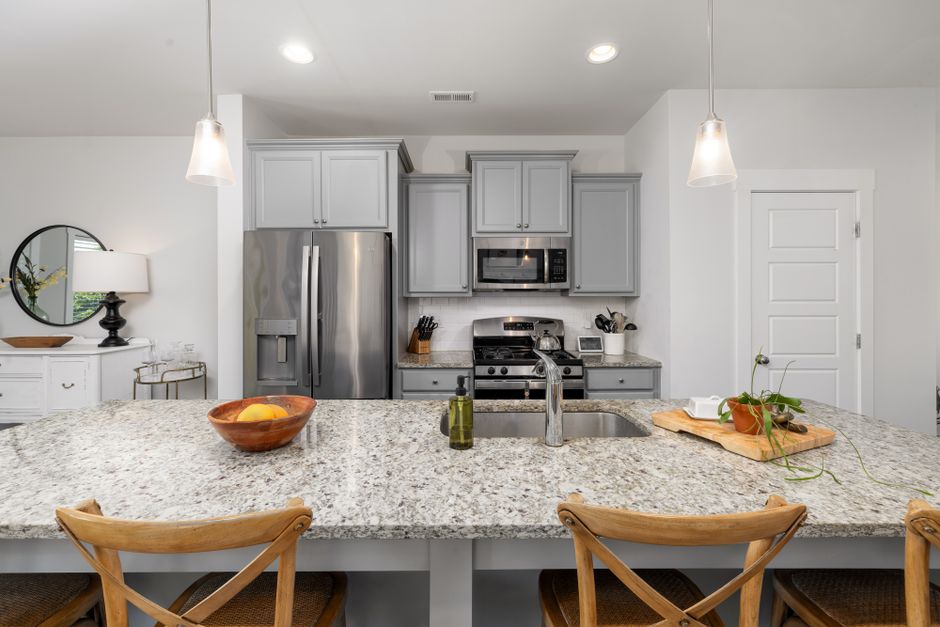
Where the tap water carries heavy calcium and magnesium, the countertop decision changes at the sink before it changes anywhere else. The comparisons below (set down at countertops omaha alone in the kitchen) come from kitchens in Omaha, NE, and the rest of Douglas County, where a white crust around the faucet base is a familiar sight. Evaporating hard water leaves calcium and magnesium deposits, and they show most at faucets and sink edges. The material decides how that film can be removed.
Marble and limestone
Marble and many limestones contain calcium carbonate. That reacts with acids such as vinegar and lemon juice, and the result is etching, a dull patch where the polish has been eaten away. This is the trap with mineral film. The water only left a surface deposit, but a vinegar-based descaler can damage the stone underneath. Sealing slows staining. It does not make marble immune to acid etching. Wipe the faucet base dry after use and clean with a neutral product.
Granite

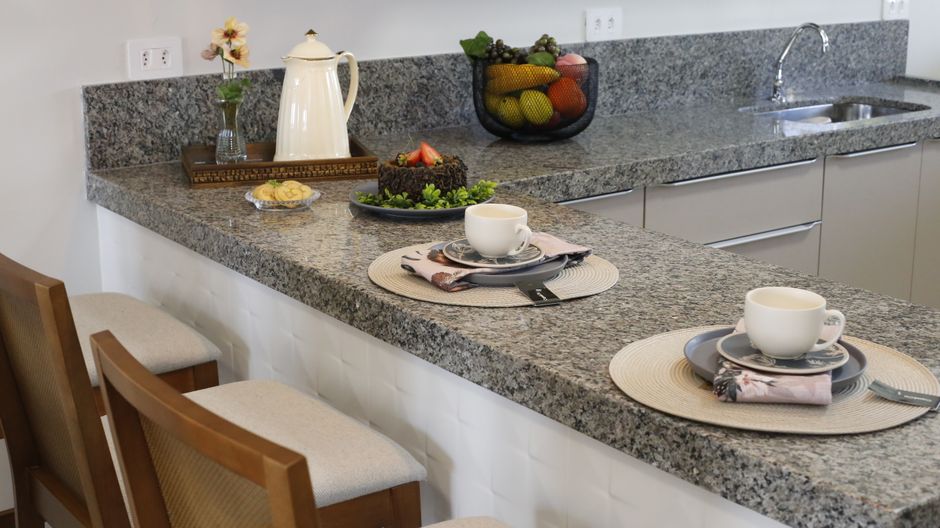
Granite is mostly silicate minerals and generally resists acid far better than marble. Some stones are porous enough to need sealing, so test the actual slab before it is installed. Put a few drops of water on an unsealed spot and watch how fast it darkens. A slab that darkens quickly gets sealed and the seal is kept up. A dense one may need little.
Quartz and soapstone
Quartz is engineered from ground quartz and polymer resin, so it needs no sealing. The resin is the weak point. Strong chemicals and high heat can damage it, so a hot pan goes on a trivet and a harsh descaler stays in the cabinet. Soapstone is dense and resists acids well, but it is soft. It scratches and dents more easily than granite, and that wear is part of how it ages. Neither one is maintenance free, they just fail in different ways.
Laminate and butcher block
Laminate fails at the seam and at exposed edges. Water that reaches the substrate causes swelling, and swelling does not reverse. Keep every seam away from the sink and faucet, and seal the cutout edge. Butcher block near a sink needs a maintained finish and prompt drying, because repeated wetting causes staining and movement in the wood. Plan on refinishing the area around the basin more often than the rest of the run.
Layout decisions at the sink
Most water damage traces back to layout rather than the material alone. Seam placement should land well clear of the sink, ideally over a cabinet partition and not across the basin. Templating should record the faucet holes, the overhang and the edge profile together, since a deep overhang over a dishwasher catches steam and drips. A remnant can work for a small run or a bar top, but check that the piece has no cracks near the cutout before it is cut. Whatever the stone, wiping the standing water each night does more than any product.